The holidays are built around the table: turkey, stuffing, Grandma’s famous pie still warm from the oven. For many families the food is the tradition, and passing on the feast can feel like passing on the celebration.
The good news: you don’t have to choose between enjoying the holidays and taking care of your health. Enjoy the meal, the dessert, the toast, and the late nights with the people you love. With a little timing and a few easy things to pass on, you can have the best of it and still feel good come January.
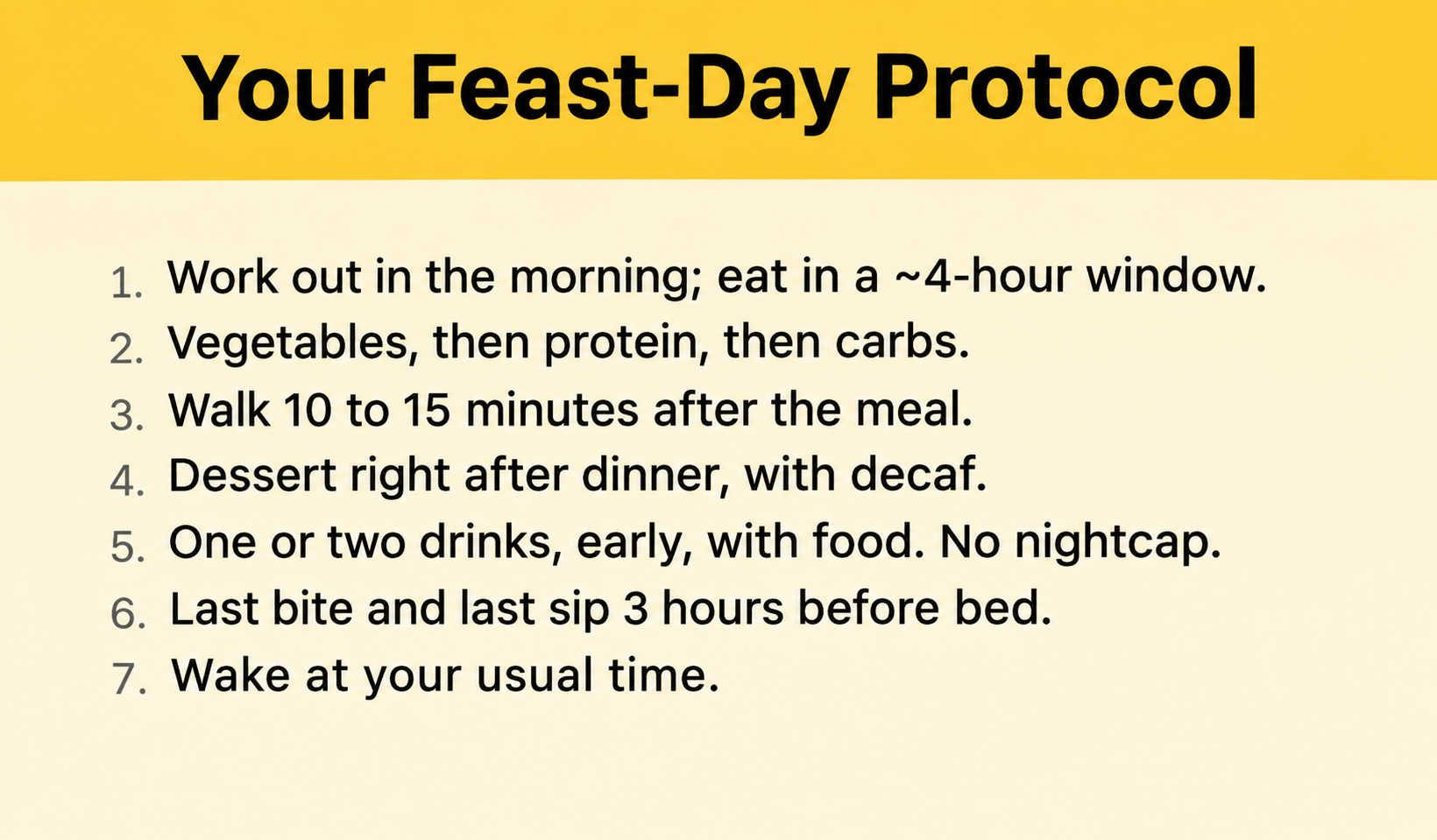
1. Shrink your eating window
On feast day, there’s no need for three full meals. Try to eat within about 4 hours around the main meal (6 to 8 hours works well on normal days). That means fewer blood sugar and insulin spikes across the day, and more hours with insulin low and your body burning fat. Until then, water, tea, and your morning black coffee are fine. Don’t arrive starving: if you’re ravenous, a small protein snack beats the appetizer table.
BONUS
Work out that morning! Muscles that have burned through their stored sugar pull more glucose from your blood for the rest of the day
2. Eat in the right order
Vegetables first, protein second, carbs last. Research from Weill Cornell found this order produced a markedly lower blood sugar spike and less insulin than eating the same meal carbs-first. Fiber slows sugar’s entry into your bloodstream; protein slows stomach emptying and boosts GLP-1, the fullness hormone today’s weight-loss medications mimic. So pass on the bread basket before dinner and build your plate in order: salad and green beans, then turkey, then the stuffing, potatoes, and a warm roll.
3. Walk after you eat
Within 30 minutes of the last bite, move for 10 to 15 minutes. Contracting muscles pull glucose out of your blood through GLUT4 transporters, independently of insulin: a smaller spike, less insulin needed. Make it a new family tradition: a slow, chatty walk around the neighborhood together. Squats or stairs during the football game count too.
4. Dessert: right after, and real
5. Drink early, then stop
Your liver makes clearing alcohol its first priority. While it does, fat burning pauses, so the meal is more likely to be stored. Keep it to one or two drinks, have them early in the gathering alongside something with protein, and alternate with water. Then no nightcap: alcohol suppresses REM sleep, fragments the second half of the night, and worsens snoring and sleep apnea.
6. Protect your sleep
Leave three hours from last bite or sip to bedtime. Going to bed full invites reflux, broken sleep, and overnight blood sugar swings. After a late night, still wake within an hour of your usual time and get outside into morning light.
7. Feast days, not a feast season
Thanksgiving is one day. The damage comes from the weeks of leftovers and office cookies in between. Feast on feast days, eat normally on the rest.